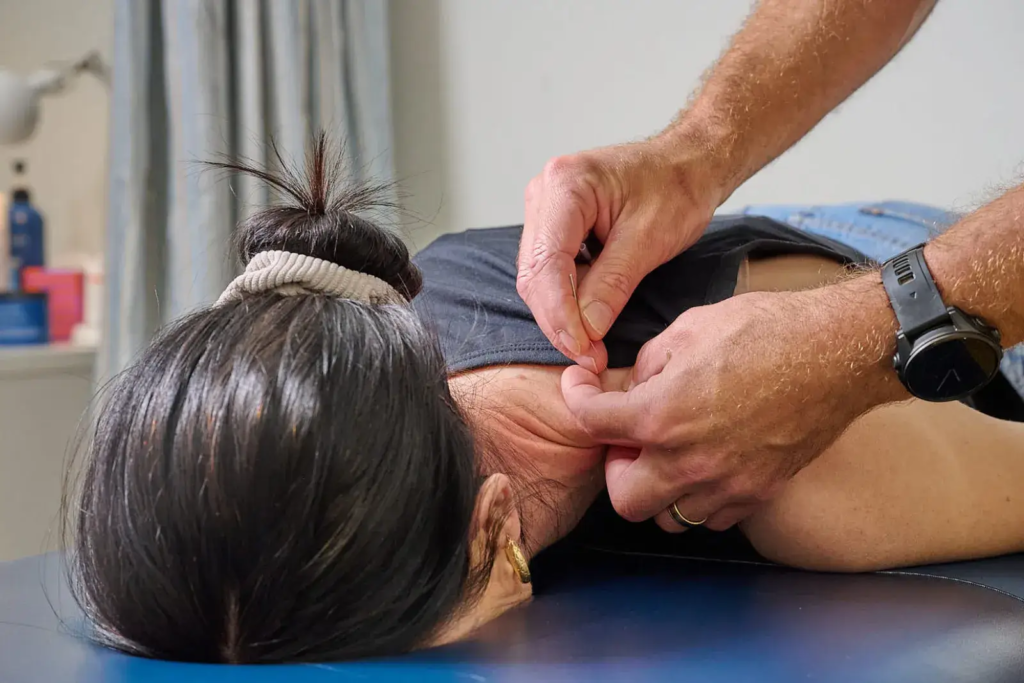
If you’ve been recommended needling as part of your treatment, one of the first questions you might ask is: “Is dry needling the same as acupuncture?”
It’s an understandable question. Both treatments use very fine, sterile needles, but that’s where most of the similarities end. They are based on different principles, have different goals, and are used to treat different problems.
If you’re considering Dry Needling in Sutherland or simply want to understand your options, here’s what you need to know.
What is dry needling?
Dry needling is a physiotherapy technique that targets painful or tight muscles to help reduce pain, improve movement, and support rehabilitation.
Your physiotherapist inserts fine, sterile needles into specific areas within a muscle, often referred to as trigger points or muscle knots. These are areas that can become sensitive, tight or overworked following injury, repetitive activity, or prolonged postures.
The aim isn’t simply to provide short-term pain relief. The goal is to help restore normal muscle function so you can move more comfortably and continue progressing with your rehabilitation.
Dry needling may be appropriate for a range of musculoskeletal conditions, including:
- Back, neck and shoulder pain
- Headaches and some types of migraines
- Sports injuries and overuse conditions
- Chronic muscle pain, including myofascial pain syndrome
- Joint stiffness and reduced movement
- Muscle tension associated with stress or anxiety
- Rehabilitation following surgery or injury
At Physio Club , we view dry needling as one part of a broader treatment plan. While it can be very effective at settling irritated muscles, lasting results usually come from combining it with the right exercises, education and a personalised rehabilitation program.
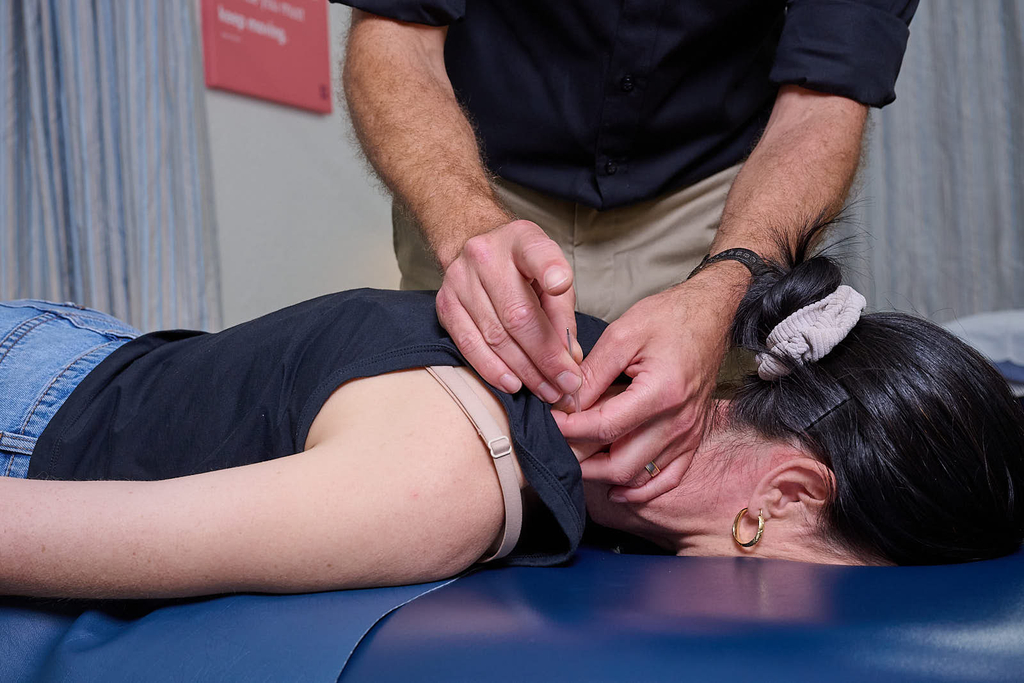
How is dry needling different from massage?
Massage and dry needling both aim to improve muscle function, but they work in different ways.
Dry needling can reach:
- Deeper muscle layers
- Persistent trigger points
- Areas that are difficult to access with hands-on treatment
For many people, massage and dry needling complement each other well. Your physiotherapist will recommend the approach that best suits your condition, and sometimes that involves using both techniques concurrently.
What is acupuncture?
Acupuncture is a traditional Chinese medicine practice that focuses on restoring balance within the body rather than specifically treating muscle dysfunction.
Acupuncture has been used for thousands of years and is based on the concept that energy, known as Qi (pronounced “chee”), flows through pathways called meridians. Fine needles are placed at specific points along these pathways to help restore balance.
People commonly seek acupuncture for:
- Pain relief
- Stress management and relaxation
- Headaches and migraines
- Sleep and general wellbeing
While research continues to explore the mechanisms behind acupuncture, its underlying philosophy and treatment approach differ significantly from physiotherapy dry needling.
Dry Needling vs Acupuncture: What are the key differences?
Although both treatments use similar needles, they are based on different clinical frameworks and have different treatment goals.
Here’s a simple comparison:
| Dry Needling | Acupuncture |
| Based on modern anatomy, physiology and pain science | Based on traditional Chinese medicine |
| Targets muscles and trigger points | Targets meridian points |
| Focuses on improving pain, muscle function and movement | Focuses on restoring balance and supporting overall wellbeing |
| Usually forms part of a broader physiotherapy rehabilitation program | Often provided as a standalone treatment |
| Commonly uses between 5 and 20 needles, depending on the area being treated | Often uses fewer needles depending on the treatment approach |
Neither approach is inherently “better” than the other, they simply have different purposes.
If your symptoms are coming from muscles, tendons or joints, dry needling with a physiotherapist is the treatment more often used to improve movement and help you progress through rehabilitation.
Does dry needling hurt?
Most people are surprised by how comfortable Dry needling is. While everyone’s experience is different, significant pain during treatment is uncommon.
You may notice:
- A brief muscle twitch
- A dull ache or feeling of pressure
- Mild soreness afterwards
That post-treatment soreness is usually similar to how muscles feel after a good workout and typically settles within 24 to 48 hours.
Before treatment, your physiotherapist will explain what to expect and make sure dry needling is appropriate for you.
Is dry needling or acupuncture right for you?
The right treatment depends on your goals and the reason you’re seeking care.
If your pain is related to muscle tightness, stiffness, reduced movement or a musculoskeletal injury, Dry needling as a physiotherapy treatment option is often useful. It can help reduce muscle tension and make movement more comfortable, allowing you to get more out of your rehabilitation program.
If your primary goal is relaxation, stress management or supporting your general wellbeing, acupuncture may be more appropriate.
The important thing is that treatment should match the problem you’re trying to solve.
If you’re unsure, your physiotherapist can assess your symptoms, identify what’s contributing to your pain, and recommend the most appropriate treatment plan for your individual goals.
Looking for Dry Needling in Sutherland?
At Physio Club , dry needling is never used as a standalone fix. It’s one tool that can help reduce pain, improve muscle function and create opportunities for better movement, and it’s always combined with a personalised rehabilitation plan designed to help you return to the activities that matter most to you.
If you’re wondering whether Dry needling could help your injury or ongoing pain, our physiotherapists can assess your condition, explain your options, and work with you to build a treatment plan that fits your goals.

References
- Australian Physiotherapy Association
- National Center for Complementary and Integrative Health
Author Bio
This article was written by Joel Overton, Physiotherapist at Physio Club Sutherland. Joel has a strong interest in sports rehabilitation and dry needling. Meet the Physio Club team