If you’ve been dealing with ongoing joint or tendon pain, you may have heard both corticosteroid (cortisone) injections and platelet-rich plasma (PRP) injections mentioned as possible treatment options.
A question I’m often asked as a physiotherapist is: “Is PRP better than cortisone?”
The answer isn’t quite that simple. Both injections may have a role in managing certain musculoskeletal conditions, but they work in very different ways. What’s most appropriate depends on your diagnosis, symptoms, previous treatment, lifestyle and, importantly, what you want to get back to doing.
Understanding the difference between corticosteroid vs PRP injections can help you have a more informed conversation with your physiotherapist and doctor about your options.

What is the difference between corticosteroid and PRP injections?
The simplest difference is that corticosteroid injections primarily aim to reduce inflammation and pain, while PRP uses components of your own blood to potentially influence the body’s healing response.
Corticosteroids are anti-inflammatory medications. PRP, on the other hand, is a biological treatment prepared from your own blood.
This distinction matters because the two treatments can have different effects in the short and longer term.
What does a corticosteroid injection do?
Corticosteroids are powerful anti-inflammatory medications. When injected into a joint or around an appropriate painful structure, they can reduce inflammation and provide relatively quick pain relief. Read more about How cortisone injections work here.
For someone experiencing significant pain, that relief can be useful. Sleeping, working, exercising and getting through everyday activities may become easier.
However, reducing pain doesn’t automatically improve the physical capacity of the area being treated.
For example, imagine a tendon has become painful because it isn’t currently tolerating the amount of load being placed on it. An injection might make that tendon feel better, but it doesn’t automatically make the tendon stronger or improve its ability to handle that load.
Research into tendinopathy supports this distinction. A systematic review found corticosteroid injections could provide good short-term pain relief for some tendinopathies, but those benefits did not necessarily continue over the intermediate and longer term.
That doesn’t mean cortisone has no place in treatment. For the right person and condition, reducing pain may help create an opportunity to participate more comfortably in rehabilitation.
What is PRP and how does it work?
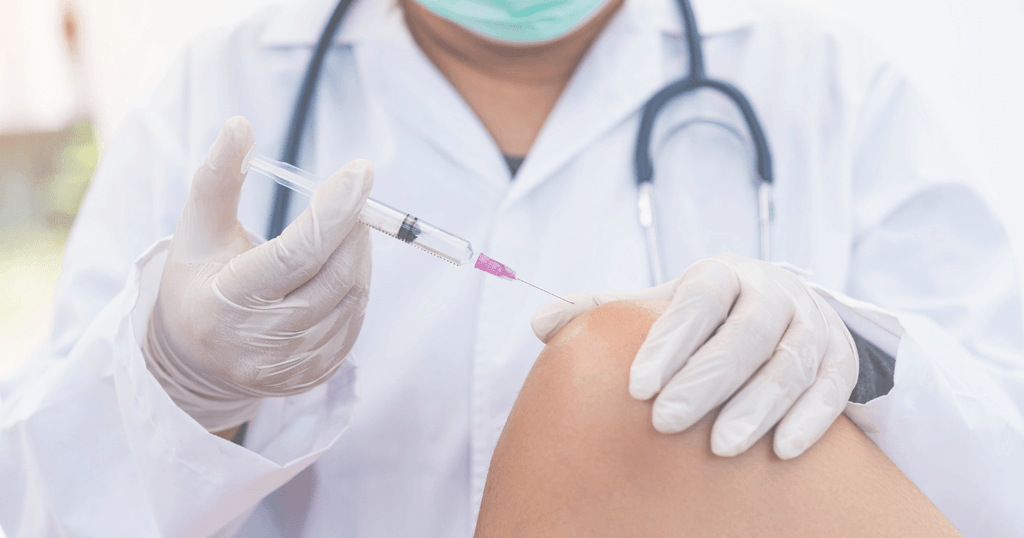
PRP stands for platelet-rich plasma. It involves taking a small amount of your own blood, processing it to separate the platelet-rich-plasma from the red and white blood cells, and injecting the resulting preparation into the area being treated.
Platelets contain growth factors and signalling molecules involved in tissue healing and repair. This provides the biological rationale behind using PRP for some musculoskeletal conditions.
However, it’s important to separate that rationale from some of the bigger claims you may see online.
PRP is sometimes described as something that will “regenerate” or “repair” damaged tissue. Current research doesn’t support promising predictable tissue regeneration for every condition or every person.
PRP itself also isn’t a completely standardised product. Preparations can differ in platelet concentration, white blood cell content, processing methods and other factors, which can make research findings harder to compare.
So, while PRP can be a reasonable treatment to discuss for particular conditions, it shouldn’t be viewed as a guaranteed fix.
Is PRP better than cortisone?
Neither PRP nor cortisone is automatically “better”. The best option depends on the condition being treated, your symptoms, your goals and the supporting evidence for your diagnosis.
Generally, corticosteroid injections are better known for relatively rapid, short-term symptom relief. PRP may offer greater potential for longer-term improvement in certain conditions.
Knee osteoarthritis is one example where research has compared the two approaches. A recent systematic review and meta-analysis of randomised controlled trials examined PRP injections against treatments including corticosteroid injections. This review reflects the growing interest in whether PRP may provide longer-lasting improvements for some people with knee osteoarthritis.
But we shouldn’t take evidence from one condition, such as keen joint osteo-arthritis, and assume it applies to every sore knee, shoulder, elbow or tendon.
This is why I wouldn’t begin the conversation with, “PRP or cortisone?”
I’d begin with: “What is contributing to your pain, and what treatment has the best evidence for your particular situation?”
Do you still need physiotherapy after an injection?
In many musculoskeletal conditions, yes. An injection may help manage symptoms, but progressive exercise and rehabilitation are often needed to build strength, capacity and confidence in movement.
This is one of the most important messages I give patients:
Making something less painful isn’t necessarily the same as making it stronger or healthier.
If pain has been stopping you from exercising, an injection may sometimes provide a window where rehabilitation feels more manageable. From there, we can gradually work on strength, movement and the demands of whatever matters to you — whether that’s getting through a workday comfortably, returning to sport or simply walking further without worrying about your symptoms.
At Physio Club Engadine and Sutherland, that might involve individual physiotherapy, progressive strengthening or Sports Rehabilitation, depending on your goals.
What should you do if you’re considering PRP or cortisone?
Start by getting clear on your diagnosis and your goals rather than choosing an injection first. A good management plan should consider how long you’ve had symptoms, what you’ve already tried, how your pain affects daily life and what you want to return to.
The key difference is straightforward:
Corticosteroid = primarily aims to reduce inflammation and pain.
PRP = potentially influences the local healing response using concentrated components of your own blood.
Neither treatment is a magic fix, and neither automatically replaces rehabilitation.
If you’re unsure which direction is right for you, your physiotherapist can help you understand what may be contributing to your symptoms, what the evidence says for your particular condition, and how an injection — if appropriate — could fit into a broader rehabilitation plan.
The goal isn’t simply to make something hurt less. It’s to help you build the confidence and physical capacity to get back to the things that matter to you.