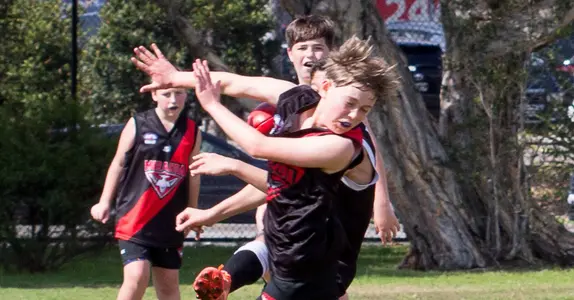
Concussion is one of the injuries I see create the most uncertainty in community sport.
Not because people do not care, but because it can be hard to know what to look for, what to do in the moment, and what the right next step actually is. In many junior and community settings, there is no doctor or health professional on the sideline. Decisions are often made by parents, coaches, teachers, or volunteers who are doing their best with the information they have.
In early 2024, the Australian Concussion Guidelines were released to help address exactly this problem. Led by the Australian Institute of Sport, these guidelines were developed to provide clear, evidence based direction on how concussion should be recognised, managed, and monitored from the time of injury through to a safe return to school, work, and sport. You can view the full national guidance through the Australian Institute of Sport concussion resources.
From a clinical point of view, this was a much needed step forward.
Concussion does not always look dramatic. Many people still associate it with a heavy collision or loss of consciousness, but that is often not the case. Symptoms can be subtle, delayed, and easily missed, particularly in children and adolescents who may struggle to explain how they are feeling.
I regularly work with athletes and families who say they were unsure at the time whether what they saw was serious enough to act on. In hindsight, many of them say they wish they had been more cautious.
The purpose of this article is to explain the Australian Concussion Guidelines in a practical, easy to understand way for people involved in youth and community sport. This includes who the guidelines are for, how to recognise possible concussion, what to do if it is suspected, and how return to learning, work, and sport should be approached.
Clear information leads to better decisions. And when it comes to concussion, better decisions protect both short term recovery and long term brain health.
More information on our Concussion Management services can be found here.
Table of contents
- What are the Australian Concussion Guidelines
- Who the concussion guidelines are for
- How concussion should be recognised
- What to do if concussion is suspected
- What not to do after a concussion
- How recovery and monitoring should be managed
- Return to learn, work, and sport in community settings
Key takeaways
If you only read one section of this article, this is the one to focus on.
Concussion should be suspected after any impact to the head or body where an athlete seems different from their usual self. Loss of consciousness is not required for concussion to be present.
In community sport settings, early recognition and conservative decision making are critical. When there is doubt, the safest option is always to remove the athlete from play.
The key points from the Australian Concussion Guidelines are:
- Concussion can occur without a direct blow to the head
- Symptoms may be subtle and may appear hours or days after the injury
- Athletes with suspected concussion should be removed from play immediately
- Monitoring over the following 72 hours is essential due to delayed symptoms
- Return to learning and work should occur before return to sport
- Minimum time frames apply before returning to contact or collision sport
These principles are reinforced across national and international guidance, including education resources provided by Sports Medicine Australia, which emphasise that early removal from play and appropriate recovery reduce the risk of prolonged symptoms and repeat injury.
From my perspective, the most important takeaway is this: concussion management does not rely on perfect diagnosis in the moment. It relies on recognising when something is not right and acting cautiously.
Clear guidelines exist to support parents, coaches, teachers, and volunteers in making these decisions with confidence, even when no healthcare professional is present.
What are the Australian Concussion Guidelines
The Australian Concussion Guidelines were developed to address a long standing gap in how concussion is managed in youth and community sport.
For years, concussion advice existed, but it was often inconsistent, difficult to interpret, or written primarily for elite sport and medical professionals. That left parents, coaches, teachers, and volunteers unsure about what to do when an athlete took a knock and did not seem quite right.
The current guidelines bring clarity.
They were developed through collaboration between the Australian Institute of Sport, Sports Medicine Australia, the Australasian College of Sport and Exercise Physicians, and the Australian Physiotherapy Association. Importantly, they are written to be used by the general public, not just healthcare practitioners.
From a clinical perspective, what stands out is the strong emphasis on recognition, removal from play, and graded recovery, rather than trying to diagnose concussion perfectly in the moment. This is particularly important in community settings where access to medical care may be delayed.
The guidelines also clearly outline that concussion is a brain injury, even when symptoms appear mild. This framing helps shift the focus away from simply returning to sport as quickly as possible, and toward protecting learning, work, and long term brain health.
Another important feature is the recognition that concussion recovery is individual. There is no fixed timeline that applies to everyone, and recovery should be guided by symptoms rather than pressure to return to play.
The Australian Physiotherapy Association supports this approach and highlights the role of appropriately trained healthcare professionals in guiding recovery and return to activity when needed. Their concussion education resources reinforce the importance of conservative management, particularly in children and adolescents.
In practical terms, these guidelines exist to help people make safer decisions in real world environments. They provide a shared framework so that schools, clubs, families, and healthcare providers are working from the same evidence based playbook.
Who the concussion guidelines are for
One of the strengths of the Australian Concussion Guidelines is that they are not written just for doctors or elite sporting environments. They are designed for the people who are most often responsible for decision making in community sport.
This includes:
- Parents and carers
- Coaches and assistant coaches
- Athletes
- Match officials
- Concussion officers
- Teachers and school staff
- Students
In junior and community sport, it is uncommon for a healthcare professional to be present when an injury occurs. Most of the time, the first response comes from a coach on the sideline, a teacher at school, or a parent watching from the boundary.
That reality is central to why these guidelines matter.
They acknowledge that concussion recognition and early management often sit with non medical people. The aim is not to turn parents or coaches into diagnosticians, but to give them confidence to recognise when something may not be right and to act conservatively.
In practice, this means understanding that concussion does not always look obvious. An athlete may walk off the field under their own power, answer questions appropriately, and still be concussed. Without clear guidance, it is easy to second guess whether removal from play is necessary.
The guidelines provide a shared language and framework so that everyone involved is working from the same set of expectations. This consistency is particularly important across schools and clubs, where mixed messages can place unnecessary pressure on young athletes to continue playing.
From my experience, when parents, coaches, and teachers feel supported by clear guidelines, decision making becomes simpler. The focus shifts away from winning the game or finishing the session and toward protecting the athlete’s short term recovery and long term wellbeing.
This is exactly where concussion management needs to sit in community sport.
How concussion should be recognised
Recognising concussion is one of the most important steps in protecting an athlete, particularly in youth and community sport where medical support is often not immediately available.
Concussion should be suspected after any impact to the head or body where the athlete appears different from their usual self. Importantly, loss of consciousness does not need to occur for a concussion to be present. In fact, most concussions do not involve being knocked out.
In community sport, recognition relies heavily on observation. Changes can be obvious, but they can also be subtle.
Common symptoms and signs of concussion include:
- Headache or pressure in the head
- Nausea or feeling unwell
- Fatigue or low energy
- Difficulty concentrating or remembering
- Feeling slowed, foggy, or not quite right
- Sensitivity to light or noise
- Dazed appearance or blank stare
- Confusion or disorientation
- Behavioural or emotional changes
- Appearing not themselves
It is also critical to understand and watch for red flags that require urgent medical attention. These include:
- Neck pain
- Increasing confusion, agitation, or irritability
- Repeated vomiting
- Seizure or convulsion
- Weakness, tingling, or burning in the arms or legs
- Deteriorating level of consciousness
- Severe or worsening headache
- Loss of vision or double vision
- Visible deformity of the skull
- Loss of consciousness
Another key point that is often overlooked is delayed symptom onset. Concussion is an evolving injury. An athlete may appear relatively normal immediately after the incident, only to develop symptoms hours or even days later.
Because of this, monitoring over the 72 hours following injury is strongly recommended. Changes in sleep, mood, concentration, or physical symptoms during this period should be taken seriously.
The Australian Physiotherapy Association reinforces that when concussion is suspected, certainty is not required to act. Their concussion education resources emphasise that early removal from play and careful observation significantly reduce the risk of prolonged symptoms and secondary injury.
From a practical point of view, the safest approach is simple. If something feels off, treat it as a concussion until proven otherwise. In community sport, caution is not overreacting. It is good decision making.
What to do if concussion is suspected
When concussion is suspected, the priority is not to make a perfect diagnosis. The priority is to protect the athlete.
In community sport settings, the safest and most effective approach is a simple one: recognise, remove, and refer.
The first step is to remove the athlete from play immediately. This should be done calmly and safely. If there is any concern about a neck injury, spinal precautions and first aid principles should be followed. The athlete should not return to training or competition on the same day, even if symptoms appear to settle quickly.
If red flag symptoms are present, emergency medical care is required. This may involve calling an ambulance or attending the nearest emergency department, depending on the severity of the situation. It is always better to err on the side of caution.
In the first 24 to 48 hours after a suspected concussion, the focus should be on symptom limited activity. This means avoiding activities that significantly worsen symptoms. For many people, this includes time away from schoolwork, screens, gaming, and demanding physical activity. Complete rest is not usually necessary, but pushing through symptoms is not helpful.
Medical review should occur as early as possible, ideally within the first few days. A general practitioner plays an important role in concussion assessment and ongoing medical oversight. In some cases, access to a GP may be delayed. When that happens, early assessment by a qualified clinician with concussion training can help guide initial management and recovery planning.
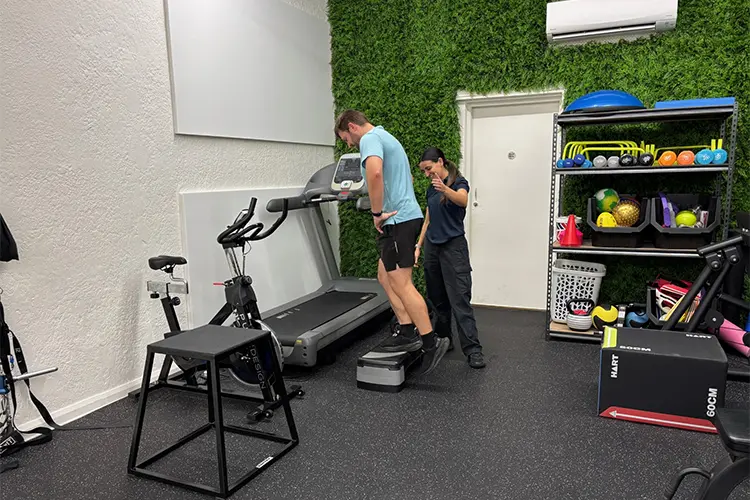
This is where structured concussion care becomes valuable. Through our concussion management services at Physio Club, we support athletes and families with assessment, education, symptom monitoring, and graded return to activity. This does not replace medical review, but it helps ensure recovery is progressing safely and appropriately.
One of the most important points I emphasise to families and coaches is this: no game, training session, or season is worth risking long term brain health. Removing an athlete from play early almost always leads to a smoother and shorter recovery.
Clear action in the first hours and days after injury sets the foundation for everything that follows.
What not to do after a concussion
Just as important as knowing what to do after a concussion is understanding what should be avoided. Many of the issues I see in prolonged or complicated recoveries come back to simple mistakes made in the early stages.
One of the biggest risks is leaving an athlete alone immediately after injury. For at least the first few hours, and ideally the rest of the day, they should be monitored by a responsible adult. If symptoms worsen or new symptoms appear, medical attention should be sought promptly.
Athletes should not be sent home on their own, even if they appear settled. Changes can occur gradually, and having someone present to observe and respond is an important safety measure.
Another common mistake is returning to play too soon. Even if an athlete feels better, same day return to sport is not recommended. Symptoms can fluctuate, and early return increases the risk of further injury, particularly if balance, reaction time, or decision making are affected.
Alcohol and recreational drugs should be avoided during recovery. These substances can mask symptoms, interfere with healing, and make it harder to recognise deterioration. Similarly, athletes should not take medications unless they have been recommended or approved by a healthcare professional.
Driving a motor vehicle should also be avoided until the athlete has been medically cleared. Concussion can affect reaction time, attention, and processing speed, even when symptoms feel mild.
Finally, one of the most damaging misconceptions is the idea that athletes should simply push through symptoms to speed up recovery. Ignoring symptoms or trying to train through them often leads to setbacks and longer recovery periods.
From a practical standpoint, the rule is simple. If an activity worsens symptoms, it is not appropriate at that stage of recovery. Recovery works best when it is gradual, monitored, and guided rather than forced.
Avoiding these common mistakes helps protect the athlete and supports a smoother return to normal activities.
How recovery and monitoring should be managed
Recovery from concussion is not a single event. It is a process that unfolds over days and weeks, and in some cases longer. One of the most important messages in the Australian Concussion Guidelines is that recovery should be guided by symptoms, not by pressure to return to sport.
In the early stages, monitoring is key.
As discussed earlier, concussion symptoms can evolve over time. This is why close observation over the first 72 hours is strongly recommended. During this period, changes in headache severity, fatigue, sleep, mood, concentration, or balance should be taken seriously.
For children and adolescents in particular, changes may show up at school rather than on the sporting field. Difficulty concentrating, irritability, increased fatigue, or reduced tolerance to screen time are all common indicators that the brain is still recovering.
From a clinical perspective, one of the biggest challenges is helping people understand that rest does not mean complete shutdown. Prolonged inactivity can actually delay recovery. Instead, symptom limited activity is encouraged. This involves gradually reintroducing cognitive and physical tasks that do not significantly worsen symptoms.
This balance is not always easy to judge, especially for families trying to manage school, work, and sport commitments. Having guidance during this phase can make a significant difference.
At Physio Club, our physiotherapy team plays an important role in monitoring recovery, identifying patterns that may be slowing progress, and helping individuals reintroduce activity safely. This often includes education around pacing, graded exposure to activity, and reassurance when symptoms fluctuate.
It is also important to recognise when recovery is not following the expected pattern. While many people recover well within a few weeks, others experience persistent symptoms. Early identification of delayed recovery allows management to be adjusted rather than pushing on with a one size fits all approach.
In my experience, the athletes who do best are those who understand their symptoms, feel supported through the process, and are not rushed back before they are ready. Careful monitoring and clear communication are what turn concussion recovery into a structured plan rather than a guessing game.
Return to learn, work, and sport in community settings
One of the most important principles in the Australian Concussion Guidelines is that return to learning and work must come before return to sport.
This can be challenging in community settings where the focus is often on getting back to training or competition as quickly as possible. However, from a recovery perspective, the brain needs to tolerate cognitive load before it can safely manage physical and sporting demands.
For school aged athletes, this means a gradual return to learning. Shortened school days, reduced homework, rest breaks, and modified screen use may be required initially. These supports are not a sign of weakness. They are part of protecting recovery.
Similarly, adults returning to work may need temporary adjustments such as reduced hours, lighter duties, or more frequent breaks. Pushing through cognitive fatigue often leads to symptom flare ups and delays recovery.
Only once learning and work activities are well tolerated without symptom exacerbation should return to sport be considered.
The guidelines outline minimum time frames for contact and collision sports. Athletes should be symptom free at rest for at least fourteen days before returning to contact training. Return to competitive contact or collision sport should not occur earlier than twenty one days from the time of concussion.
These time frames exist to reduce the risk of repeat injury and to protect the brain during a vulnerable period. They are particularly important for children and adolescents, whose brains are still developing.
Return to sport should always follow a graded progression, starting with light aerobic activity and gradually increasing intensity and complexity. Any return of symptoms during this process is a signal to step back and reassess rather than push forward.
In community sport, coordination between families, schools, clubs, and healthcare providers makes a significant difference. Clear communication reduces confusion and helps everyone work toward the same goal.
At Physio Club, our broader services support this process by working alongside medical practitioners, schools, and sporting organisations to guide graded return to activity in a structured and individualised way.
From my perspective, successful return to sport after concussion is not about speed. It is about confidence, safety, and long term wellbeing. When return to learn, work, and sport are approached thoughtfully, outcomes are consistently better.