Introduction
Achilles tendinopathy might be the condition we see most often in clinic that people expect to just ‘go away on its own.’ They rest it for a few weeks. It eases off a little. Then they go back to running or training, and it comes back, sometimes worse than before.
It’s no secret that this one frustrates people. And honestly, it makes sense why. The pain can be very manageable day to day, so it doesn’t feel like a serious injury. But left alone, or managed the wrong way, it can drag on for months.
Here’s what I want you to know: Achilles tendinopathy is one of the most common musculoskeletal conditions in Australia. The Australian Physiotherapy Association estimates that around 1.5 million Australians have experienced it. It affects athletes and non-athletes alike. It can show up in someone training for their first fun run, or in someone who just started a new job that involves a lot of standing.
The good news? With the right approach, most people recover well and get back to doing what they love. We see it every week at the clinic.
In this article I want to walk you through everything you need to know, what Achilles tendinopathy actually is, what causes it, how to tell if that’s what you’ve got, and what treatment actually looks like.
Table of Contents
- What is Achilles tendinopathy?
- Achilles tendinopathy symptoms
- What causes Achilles tendinopathy?
- Insertional vs midportion: what’s the difference?
- What is the most effective treatment for Achilles tendinopathy?
- How long does Achilles tendinopathy take to heal?
- When should you see a physio?
- FAQs
Key Takeaways
- Achilles tendinopathy is a degenerative tendon condition, not a simple inflammation, and rest alone usually won’t fix it.
- It affects around 1.5 million Australians and can happen to both athletes and people with sedentary lifestyles.
- The most effective treatment is progressive loading exercise; not rest, not just massage.
- Recovery typically takes 3 to 6 months, but most people can keep doing modified activity during that time.
- Early treatment produces better outcomes;, the sooner you get on top of it, the easier it is to manage.
- There are two main types: insertional and midportion, and they are managed slightly differently.
What Is Achilles Tendinopathy?
The Achilles tendon is the thick band of tissue that connects your calf muscles to your heel bone. It is the largest and strongest tendon in the body, and it handles an enormous amount of load with every step you take.
Tendinopathy is what happens when a tendon is repeatedly overloaded without enough recovery time. The structure of the tendon starts to break down, not because of a sudden tear or injury, but because the cumulative demand is more than the tendon can handle. The body’s attempts to repair it don’t keep pace, and over time you get a disorganised, degenerated tendon that is painful and not functioning the way it should.
It’s worth clearing something up here because there is a lot of confusion about terminology. You might have heard the terms ‘Achilles tendonitis’ or ‘Achilles tendinosis.’ These are older terms. Tendonitis implies acute inflammation, which is not really what’s happening in most persistent cases. Tendinopathy is the more accurate umbrella term used today by physiotherapists and sports medicine doctors.
The condition is well documented in Australian clinical research. Healthdirect Australia describes tendinopathy as a breakdown in the structure of the tendon that causes ongoing pain and reduced function. It is not simply a bruise or a sprain, it requires specific management to recover properly.
The tendon doesn’t need rest, it needs the right kind of load.
Achilles Tendinopathy Symptoms
The symptoms of Achilles tendinopathy are fairly consistent and recognisable once you know what to look for. If you’ve been dealing with heel or lower leg pain that doesn’t quite match the description below, it’s worth getting it properly assessed, because not all Achilles pain is tendinopathy.
Common symptoms include:
- Pain at the back of the heel or in the Achilles tendon, typically a few centimetres above where the tendon attaches to the heel bone, or right at the attachment point itself.
- Stiffness and pain in the morning, or after a period of sitting or rest. Many people describe it as the worst when they take their first steps out of bed, then it “warms up” after 10 to 30 minutes of movement.
- A thickened or lumpy feeling on the tendon when you press it or run your fingers along it.
- Pain that worsens with increased activity;, running, jumping, hill walking, or stair climbing are common triggers.
- Pain that eases during exercise but returns afterwards or the following morning.
- In some cases, mild swelling around the tendon.
One pattern I see a lot in clinic is what I call the ‘warmup trap.’ People feel okay once they get moving, so they push through and train at full intensity. Then two days later they are hobbling. The tendon was coping during exercise, but the load was too much for the recovery phase. That warmup effect can give a false sense of progress.
If you have sudden, sharp pain in the Achilles that feels like something snapped or kicked you from behind, especially if you cannot bear weight, that is a different situation entirely. That could indicate a rupture, and you should seek assessment straight away.
What Causes Achilles Tendinopathy?
The short answer is: a change in load that the tendon wasn’t prepared for.
But the picture is a bit more nuanced than that. There are a few distinct groups of people who develop Achilles tendinopathy, and the causes are a little different for each.
The athletic group
This is probably the most well-known presentation. Runners, football players, basketball players, and anyone doing repetitive high-impact activity can overload the tendon over time. Common triggers include increasing training volume or intensity too quickly, changing running surfaces, switching footwear, or returning to sport after a break.
If you’re a runner, it’s also worth knowing about ITB syndrome, another common overuse injury that can develop alongside Achilles problems, particularly when training load increases quickly.
The deconditioned group
This one surprises people. You don’t need to be an athlete to get Achilles tendinopathy. A person who has been mostly sedentary and then starts a new job that involves standing or walking for hours, or picks up a new exercise habit after years off, can overload a tendon that simply isn’t conditioned for that level of demand. A small change in relative load can be a big change for an unconditioned tendon.
The hormonal group
Post-menopausal women are at increased risk of tendinopathy due to hormonal changes that affect tendon structure and repair. Weight changes associated with this life stage can also increase the load on the tendon.
Other contributing factors
- Previous injuries to the lower limb, including ankle and knee injuries, can change the way load is distributed through the foot and Achilles.
- Previous tendinopathy elsewhere in the body.
- Some systemic conditions, including certain inflammatory bowel diseases, are associated with insertional tendinopathy.
- Certain medications, particularly some antibiotics in the fluoroquinolone family, have been linked to tendon damage. If you are on medication and experiencing tendon issues, mention it to your doctor.
- Foot posture and biomechanics, though this is more nuanced than simply having “flat feet.”
The Australian Institute of Sport recognises load management as the central factor in tendinopathy development and recovery. The tendon is not the problem, the mismatch between load and capacity is.
Insertional vs Midportion Achilles Tendinopathy: What’s the Difference?
This is something that doesn’t get talked about enough in general articles on this topic, and it actually matters a lot for how you manage it.
There are two main locations where Achilles tendinopathy develops:
Midportion Achilles tendinopathy
This is the more common type. Pain sits roughly 2 to 6 centimetres above the heel bone, in the middle of the tendon. This is the area most commonly affected in runners and athletic populations. It responds very well to progressive loading exercise, and this is what most of the research is based on.
Insertional Achilles tendinopathy
This type affects the point where the tendon attaches to the heel bone. It can sometimes involve bony changes (a heel spur or Haglund deformity). The management is slightly different, some exercises that work well for midportion can actually aggravate insertional tendinopathy, particularly exercises that involve dropping the heel below a step. Getting the diagnosis right matters.
A physiotherapist will be able to tell you which type you have based on where your pain is, what activities aggravate it, and how it responds to different tests. This distinction is why I’d always recommend getting assessed rather than following a generic exercise program you found online. W, what works for one type can set back the other.
What Is the Most Effective Treatment for Achilles Tendinopathy?
Here is where things get really interesting, and where most people are surprised.
The treatment with the highest level of clinical evidence for Achilles tendinopathy is exercise. Specifically, progressive tendon loading exercise. Not rest. Not ice alone. Not massage on its own. Exercise.
The reason makes sense once you understand the condition. The tendon has degenerated because it hasn’t been able to keep up with the load placed on it. To stimulate proper repair, we need to apply the right kind of mechanical load, enough to drive adaptation, not so much that we’re making things worse. That’s a progressive exercise program, carefully built around your current capacity and your goals.
What a treatment plan typically looks like
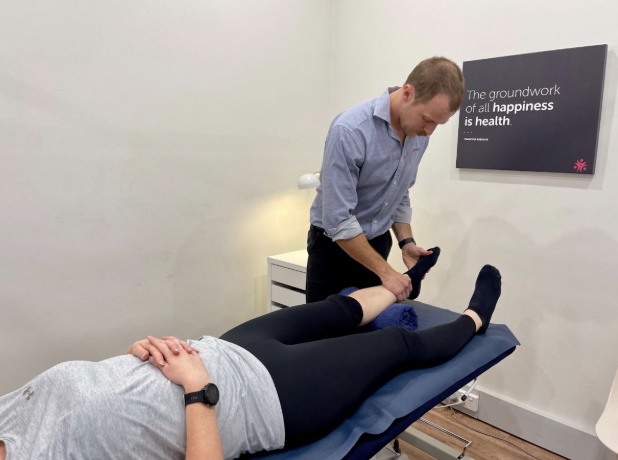
At Physio Club, we build an individualised program based on where you are right now and where you want to get back to. That usually includes:
- Isometric exercises early on, these involve holding a position under load without movement, and are great for reducing pain in the initial stages.
- Progressive isotonic loading, exercises like calf raises that build tendon strength and capacity over time. These are the backbone of Achilles rehab.
- Plyometric and sport-specific loading, for people who want to return to running or sport, we gradually reintroduce higher-impact activity once the tendon has built enough capacity.
- Activity modification, not complete rest, but smart management of what you do and how much, to avoid continually overloading the tendon during recovery.
Adjunct therapies
We also use additional techniques to help manage symptoms and support recovery, including:
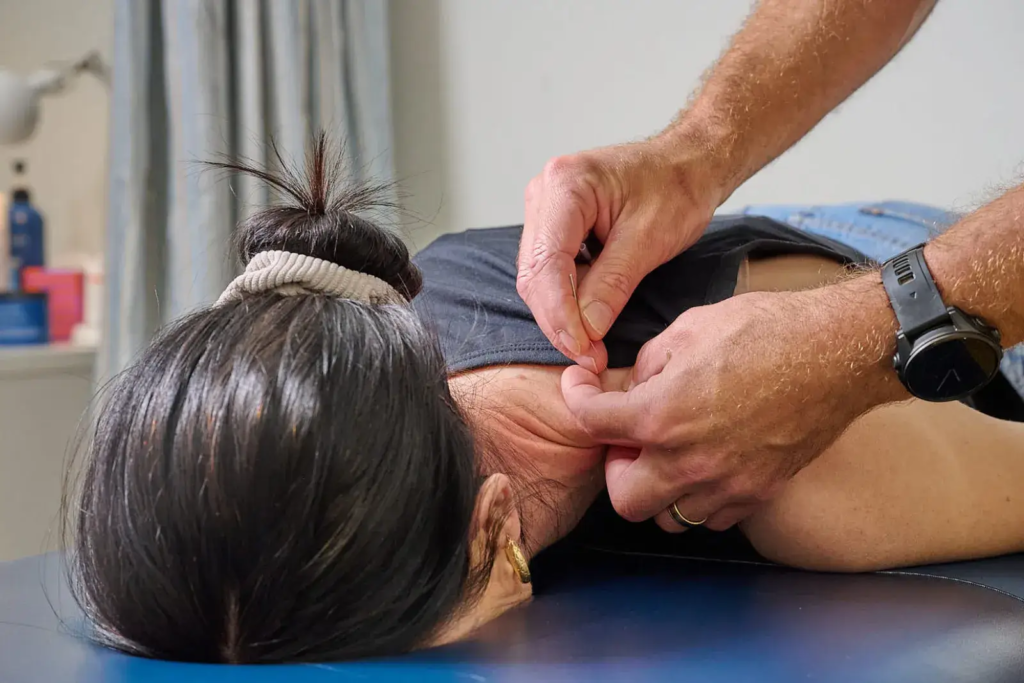
- Dry needling to address calf muscle tightness and trigger points that can contribute to tendon load. (If you’re also dealing with calf pain separately, we’ve covered that in its own article too.)
- Massage and soft tissue work for symptom relief and tissue management.
- Taping or strapping to reduce load on the tendon during activity.
- Education around footwear and load management in everyday life.
One thing I always tell people: treatment should not be painful. Mild discomfort during loading exercises is okay and expected, but pain that lingers for more than 24 hours after exercise means we’ve done too much. We use a simple monitoring approach to help people self-manage during recovery.
If you are looking for evidence-based guidance on managing tendinopathy, the Australian Physiotherapy Association has published detailed information on current best-practice approaches.
Wondering whether a cortisone injection might help? It’s a question we get a lot, especially with insertional presentations. We’ve written a full breakdown on cortisone injections for tendon pain if you want to understand the evidence before making a decision. You can also find more information va our tennis elbow article as well.
How Long Does Achilles Tendinopathy Take to Heal?
This is probably the question I get asked most often, and I’m going to be straight with you.
Achilles tendinopathy typically takes 3 to 6 months to fully resolve, depending on how long you’ve had it, how severe the tendon changes are, and how consistently you do your rehab.
I know that’s not always what people want to hear. But here’s the reassuring part: most people don’t have to stop doing everything they love during that time. We work with you to modify your activity so you can keep moving while the tendon recovers. That’s very different from six months on the couch.
The timeline also depends heavily on how early you start treatment. People who come in when symptoms are relatively new tend to progress faster than those who have been pushing through pain for twelve months hoping it resolves on its own. Early treatment genuinely produces better outcomes, and I’ve seen that pattern consistently over the years in clinic.
What you can generally expect:
- Weeks 1 to 4: Pain starts to become more manageable with load modification and early exercise. Morning stiffness often improves noticeably.
- Months 1 to 3: Tendon strength and capacity building. Most people see meaningful improvement and are able to increase activity levels.
- Months 3 to 6: Progressive return to full activity, including running and sport if that is the goal.
Tendon tissue itself is slow to remodel, it doesn’t have the same blood supply as muscle, for example. That’s why consistency with your program matters so much. The people who do the work get the results.
When Should You See a Physio for Achilles Pain?
Honestly? Sooner rather than later.
I know that sounds like something every physio would say. But with Achilles tendinopathy specifically, the evidence is really clear that early intervention leads to better outcomes and shorter overall recovery times.
You should book in if:
- You have been dealing with Achilles or heel pain for more than two weeks.
- The pain is affecting your training, work, or daily activities.
- You’ve tried rest and the pain keeps coming back when you return to activity.
- You have morning stiffness that takes more than a few minutes to settle.
- You can feel a thickening or lump on the tendon.
And if you ever experience sudden, severe Achilles pain where it feels like something has snapped, please get assessed immediately. A complete tendon rupture is a different injury entirely and needs urgent attention.
You can book online with our team at Physio Club, or give us a call if you’re not sure whether what you’re experiencing warrants a visit. We’re happy to have a chat.
FAQs
Is Achilles tendinopathy the same as Achilles tendonitis?
Not exactly. Tendonitis implies acute inflammation, which is part of what happens early on. Tendinopathy is the broader, more accurate term that covers the degenerative changes in the tendon that occur with ongoing overload. Most chronic Achilles pain is better described as tendinopathy than tendonitis.
Can I keep running with Achilles tendinopathy?
In many cases, yes, with some modifications. Complete rest is rarely the answer and can actually slow down your recovery. A physiotherapist can help you work out how much running is safe for your tendon right now, and how to gradually build back up. The key is monitoring your symptoms and not pushing through pain.
What exercises help Achilles tendinopathy?
The most evidence-based exercises are calf raises, particularly the eccentric (lowering) and heavy slow resistance variations. The specific program depends on whether you have midportion or insertional tendinopathy, some exercises that help one type can aggravate the other. Getting assessed first means you start the right program from day one.
Will Achilles tendinopathy go away on its own?
Sometimes mild cases do settle with rest and activity reduction. But many people find the pain returns as soon as they go back to activity. Without progressive loading to help the tendon adapt and strengthen, the underlying problem hasn’t been addressed. Most people benefit significantly from physiotherapy-guided rehab.
Is stretching good for Achilles tendinopathy?
This is a nuanced one. Gentle calf stretching can help with stiffness, but aggressive stretching of an already painful tendon can sometimes make things worse, particularly with insertional tendinopathy. It’s worth getting guidance on what is appropriate for your specific presentation.
Do I need a scan to diagnose Achilles tendinopathy?
Usually, no. Achilles tendinopathy is a clinical diagnosis, and a skilled physiotherapist can diagnose it based on your history, symptoms, and a physical assessment. Imaging such as ultrasound or MRI can be useful in some cases to rule out other conditions or guide treatment decisions, but it is not always necessary. You can learn more about when imaging is helpful at Healthdirect Australia.
Can Achilles tendinopathy become permanent?
In rare cases of very long-standing or severely neglected tendinopathy, structural changes in the tendon can become difficult to fully reverse. This is one of the key reasons we encourage early treatment. The vast majority of people, with the right program and consistency, recover well and return to full activity.
What footwear helps with Achilles tendinopathy?
Footwear with a small heel drop (the difference in height between heel and forefoot) can reduce the load on the Achilles and help with symptoms. Completely flat shoes like thongs or minimalist trainers are often poorly tolerated. Your physio can give you specific guidance based on your situation.
Final Thoughts
Achilles tendinopathy is one of those conditions that is genuinely frustrating, partly because it tends to linger, and partly because the instinct to rest and wait it out is often the wrong move.
But here’s the thing I’ve seen again and again in clinic: with the right approach, people get better. Athletes get back to training. Walkers get back to their morning routine. People who had been limping around for months get back to doing what they love.
The key is understanding what the tendon actually needs, and that’s not rest. It’s the right kind of progressive load, applied consistently over time, alongside smart activity management.
If you’ve been dealing with Achilles pain and putting off getting it looked at, this is your sign. The sooner you start, the easier it is to manage, and the faster you’ll get back to full activity.
Never a dull moment in clinic, and Achilles tendinopathy is definitely one condition where early action makes a real difference. Book online with the team at Physio Club and let’s work out a plan that gets you moving again. If you’ve got questions, feel free to reach out, we’re always happy to help.
— Tom Hol
Physiotherapist and Business Owner, Physio Club