For many women, menopause arrives with far more than hot flushes. It can bring fatigue, sore joints, disrupted sleep, brain fog, reduced confidence and the frustrating feeling that your body no longer responds the way it used to.
Recent discussions around menopause have helped shine a light on something we see regularly at Physio Club: while hormonal changes are a natural part of life, they don’t mean you have to stop being active. In fact, exercise during menopause may be one of the most valuable tools you have to support your physical and mental wellbeing.
The key isn’t exercising harder — it’s exercising smarter. A well-designed program that includes strength training for females, balance work and enjoyable movement can help you continue doing the things you love while supporting your long-term health.
Why is exercise during menopause so important?
Exercise during menopause helps maintain muscle strength, bone health, balance and overall wellbeing while supporting many of the common physical changes that occur as hormone levels change.
During menopause, levels of oestrogen gradually reduce. While we often think of oestrogen in relation to reproductive health, it also plays an important role in maintaining healthy bones, muscles and connective tissues.
As hormone levels change, many women notice:
- Muscle strength decreasing
- More frequent joint aches and stiffness
- Reduced energy levels
- Changes in body composition
- Lower bone density (through DEXA scan, or postural changes or fractures)
- Feeling less steady on their feet
Not everyone experiences all these changes, and the severity varies from person to person. Some women transition through menopause with very few symptoms, while others find it significantly impacts daily life.
The encouraging news is that regular exercise can help support many of these changes. Think of movement as giving your body a gentle reminder that these muscles and bones are still needed. Our bodies are remarkably adaptable when we continue to challenge them in the right way.
Why is strength training for females especially important during menopause?
Strength training helps preserve muscle mass, improve bone health and maintain independence as we age.
One of the biggest changes that occurs during menopause is the gradual loss of lean muscle tissue. This process is known as sarcopenia. At the same time, bone density naturally declines, increasing the risk of osteoporosis (the silent process of bone weakening to the point of breaking) later in life.
The good news is that bones respond to load. When muscles pull on bones during resistance exercises, they stimulate the body to maintain bone strength.
You don’t need to become a powerlifter to benefit.
Effective strength training for females can include:
- Free weights
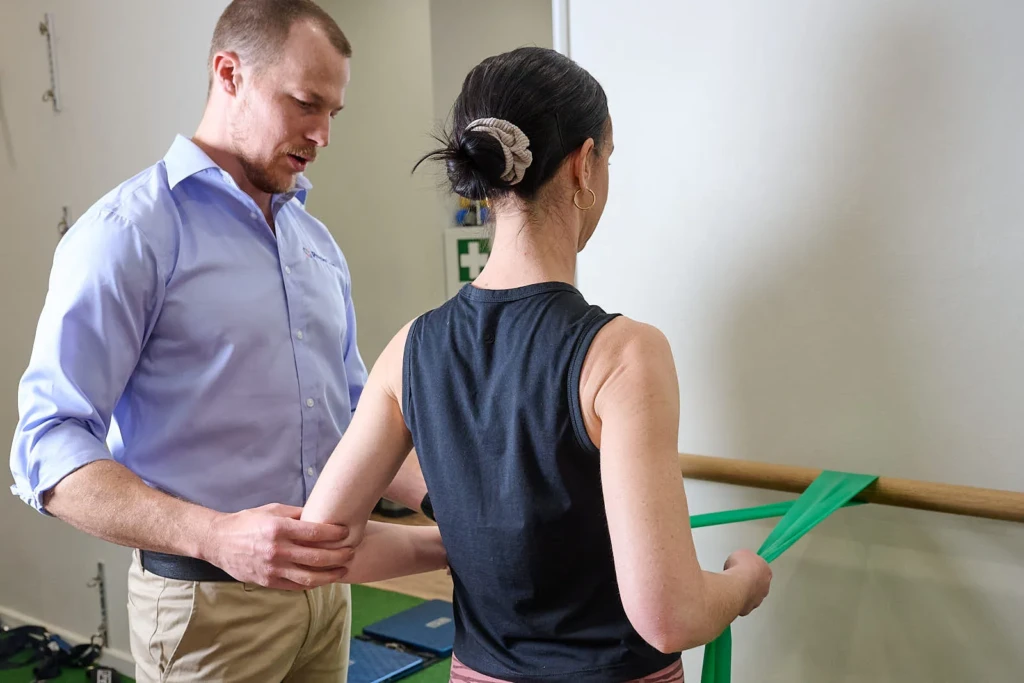
- Resistance bands
- Weight machines
- Bodyweight exercises
- Functional strengthening exercises
The goal isn’t necessarily lifting the heaviest weights possible. It’s gradually challenging your muscles in a safe, consistent way.
A simple way to think about it is like maintaining your home. If you never perform any maintenance, things slowly begin to deteriorate. Regular strength training is like ongoing maintenance for your muscles and bones — it helps keep everything working well for longer.
For women with reduced bone density, like with osteopenia (lower than normal density, but not quite low enough to be classed as osteoporosis) or osteoporosis, an individualised exercise program is especially important to ensure exercises are both safe and effective.
Does balance training really make a difference?
Yes. Balance training becomes increasingly important during menopause because maintaining good balance helps reduce falls risk and supports confidence in everyday movement.
Balance is something we rarely think about until it becomes more difficult.
Like strength, balance is a skill that improves with practice.
Simple balance exercises might include:
- Standing on one leg
- Heel-to-toe walking
- Step-up exercises
- Controlled changes of direction
- Functional movements that challenge stability
Improving balance isn’t just about preventing falls in later life. Better balance often means feeling more confident walking on uneven ground, playing with grandchildren, returning to hiking or participating in recreational sport.
At Physio Club in Sutherland and Engadine, we often combine strength and balance exercises because they complement each other so well.
What’s the best way to start exercising during menopause?
The best exercise program is one you enjoy enough to keep doing consistently.
Many women feel frustrated if they can’t exercise the same way they did in their 20s or 30s. It’s important to remember that your body may need a different approach rather than simply more effort.
Instead of aiming for perfection, aim for consistency.
A good starting point may include:
- Strength training a couple of times each week
- Regular walking or other cardiovascular exercise
- Balance exercises several times each week
- Flexibility and mobility work to stay comfortable
If you’re feeling fatigued, rather than committing to an hour-long workout, tell yourself you’ll move for just 5-10 minutes. Often, once you begin, your energy improves. If it doesn’t, you’ve still done something positive for your body.
Just as importantly, choose activities you genuinely enjoy. Whether that’s Pilates, swimming, dancing, hiking or gardening, movement doesn’t have to happen in a gym to be beneficial.
If symptoms such as severe fatigue, significant pain or disrupted sleep are affecting your ability to exercise, it’s also worth speaking with your GP. Exercise is an important part of managing menopause, but it’s only one piece of the puzzle. Some women may also benefit from medical assessment and discussion about other treatment options.
Our supervised exercise programs can also provide a supportive environment to rebuild confidence with movement while improving strength, balance and mobility.
Moving forward with confidence
Menopause isn’t the end of being active — it’s often the ideal time to rethink how you look after your body.
Rather than chasing the workouts you used to do, focus on building a body that’s strong, steady and capable for the decades ahead. Regular exercise during menopause, particularly strength training for females combined with balance work, can help support bone health, maintain muscle strength and keep you doing the activities that matter most to you.
Small, consistent steps almost always beat occasional bursts of motivation. Your body is adapting, not giving up on you — and with the right guidance, you can adapt alongside it.
If you’re unsure where to begin, an assessment with one of our physiotherapists or exercise physiologists at Physio Club can help you develop an individual program that suits your goals, current fitness and stage of menopause.
This article was written by Rebecca Martin, Senior Exercise Physiologist at Physio Club Engadine. Bec’s special interest areas are osteopenia & osteoporosis, falls prevention, and arthritic conditions.